
by myCREcloud | Jan 5, 2026 | Company
Let’s be real—managing construction finances is complicated. You’ve got multiple projects running simultaneously, crews spread across different job sites, constant budget changes, and regulatory requirements that seem to shift monthly. If you’re still running Sage 300 CRE on-premise servers, you’re making your life way harder than it needs to be.
Work From Anywhere (Including That Coffee Shop)
One of the biggest perks of cloud-based Sage 300 CRE? You can actually access your financial data from anywhere. Your project manager stuck in traffic can pull up the latest budget numbers on their phone. You can review project profitability from home. The estimator can check labor costs while waiting for a client meeting. No more being chained to the office—or worse, calling someone at the office to look something up for you.
Your IT Team Can Finally Breathe
Managing on-premise servers is like having a second job that nobody asked for. There’s constant patching, backups that need monitoring, hardware upgrades, and that one time something crashes at 2 AM on a Sunday and someone has to scramble to fix it. Cloud deployment puts all that responsibility on the cloud provider instead. Your IT person stops being a server babysitter and can actually focus on things that move the needle for your business.
Updates That Don’t Disrupt Your Day
With on-premise systems, every software update means planning, testing, and usually some downtime. With cloud-based Sage 300 CRE, updates happen automatically in the background. You wake up with new features and security patches already installed. No disruption, no IT meetings about “maintenance windows,” no praying that something doesn’t break.
Security That’s Actually Better Than Your On-Premise Setup
Counterintuitive, right? But major cloud providers have security teams and infrastructure that most mid-size construction companies can’t match. They’ve got encryption, redundant systems across multiple locations, and they’re constantly updating defenses against new threats. Plus, if a data center goes down, your data is automatically available from another location. Try doing that with a server in your office.
Growing Without a Budget Nightmare
Remember when you had to buy a new server because you hit capacity? Or when you acquired another company and had to figure out how to integrate their systems? Cloud scales with you. Add 50 new users? No problem. Expand to a new region? Just start using it. No capital expenditures, no infrastructure headaches—you just grow.
You Know Exactly What You’re Paying
With on-premise systems, costs are unpredictable. There’s the initial hardware investment, then maintenance, then unexpected repairs, then upgrades, then replacement when hardware dies. Cloud is different—you pay a consistent monthly or annual fee and that’s it. Way easier to budget for and way easier to understand whether you’re getting good value.
Your Team Can Actually Collaborate
Construction is a team sport. Your estimators need to talk to project managers, who need input from accountants, who need data from site supervisors. Cloud-based Sage 300 CRE makes this seamless. Real-time data visibility means everyone’s working from the same playbook. Plus, it integrates with other tools your team probably uses anyway—CRMs, project management apps, field service platforms.
When Things Go Wrong, Your Business Doesn’t Stop
Hardware fails. Hurricanes happen. Ransomware attacks exist. With on-premise systems, a major failure can cripple your business for days or weeks. Cloud-based systems have automatic backups across multiple locations and failover systems that kick in automatically. Your data is safe and accessible even when something goes wrong.
You Can Actually Launch and Start Getting Value
On-premise implementations are slow. You need to procure hardware, set up networks, install software, test everything. It takes months before you see any benefit. Cloud implementations can be up and running in weeks. For a company that’s struggling with outdated financial processes, that matters.
The Bottom Line
Cloud-based Sage 300 CRE isn’t just a technology upgrade—it’s removing friction from how you do business. Your team works better because they can access data anywhere. Your operations are more resilient because you’re not betting everything on hardware in your office. Your costs are predictable and you’re not overpaying for infrastructure you don’t need.
In an industry that’s already dealing with labor shortages, supply chain chaos, and tight margins, why make it harder on yourself? Cloud deployment gives you the tools to run a tighter ship, make faster decisions, and actually compete with larger competitors who have better resources.
If you’re still running on-premise, it’s time to have a real conversation about moving to the cloud. Your business will thank you.

by myCREcloud | Jul 11, 2025 | Company
In today’s business world, technology plays a significant role in almost every industry. It has disrupted the way we live, work, interact and collaborate.
There are endless ways that technology can benefit businesses like yours. Technology can help you automate processes, connect with new customers and improve communication within your company. Ultimately, technology can help you reach your business goals and be more successful.
However, small and medium-sized businesses (SMBs) often have more difficulty implementing new technologies than larger businesses. This could be due to a lack of resources, compatibility issues with existing systems or complications in managing new technology. You might also find it hard to keep up with the latest technological trends.
This is where you need to consider hiring an external IT service provider in addition to your existing IT team or simply rely on an IT service provider if you don’t have an internal IT team. An IT service provider is a specialist who can act as your outsourced IT team.
The benefits of outsourcing IT services over hiring internally
There are many benefits of outsourcing IT services rather than hiring internally, including:
More comprehensive support
Outsourcing your technology needs can be a great way to get more robust support for your business. By outsourcing, you gain access to a team of professionals with a wide range of skill sets rather than just one person or a small group with a specific skill set. This can be beneficial for businesses looking for assistance in a range of areas.
On-demand
If you only have one person providing your IT services, you only get service when that individual is available. That’s why it’s crucial to look for 24/7/365 support and that’s where an IT service provider comes in. With an IT service provider, you have a team of experts who are always on call to help you with your IT needs.
You can rest assured knowing that your systems are being taken care of and that you’ll never be without service again.
More reliable
When you hire a specialized IT service provider, you are basically hiring a team of experts. That means if someone from that external team leaves, your support will not suffer. You’ll continue to have access to the same level of support as before.
Internal hires, on the other hand, don’t come with that same safety net. When someone quits or gets fired, your support abruptly dwindles. You’ll have to spend time training a new hire and getting them up to speed.
Worry-free
An IT service provider will provide you with the necessary software, tools and staff to manage your entire IT environment. You can focus on your business and leave the IT management to them. This is an excellent option for small businesses that lack the time or resources to manage their own IT department.
Predictable cost
The most enticing benefit of partnering with an IT service provider is the monthly bill you’ll receive. This predictable bill will take away the worry of budgeting for employee benefits, bonuses, etc.
Collaborate with the right partner
An IT service provider like us might be exactly what your business needs. We can help you by providing a single point of contact for all your IT needs, right from industry-best software to support and maintenance. We can also provide you with access to resources you may not have otherwise, such as a broader range of software and skill sets, as well as security, compliance and backup services.
Finally, we can help you stay up to date on the latest technologies, which can improve your business efficiency and competitiveness. Feel free to contact us today to take the first step towards solving your technology woes.

by myCREcloud | May 2, 2025 | Cloud
Many businesses assume that cloud-based platforms like Microsoft 365 (O365) and Google Workspace automatically protect their data. While these services offer robust uptime and basic retention policies, they do not provide comprehensive backups that protect against data loss from accidental deletion, cyber threats, or compliance violations. That’s where SaaS (Software as a Service) protection comes in—providing reliable, third-party backups to ensure business continuity and data security.
The Misconception About Cloud Data Security
Microsoft and Google provide high-availability cloud environments, but their shared responsibility model places data protection in the hands of the user. While they secure infrastructure and application uptime, they do not protect businesses from:
- Accidental Deletion – Files, emails, and entire accounts can be mistakenly deleted, sometimes permanently.
- Malicious Insider Threats – Employees may intentionally delete or alter data before leaving a company.
- Ransomware and Cyberattacks – Attackers can encrypt or delete cloud-stored files, leaving businesses without access to critical data.
- Retention Policy Limitations – Microsoft 365 and Google Workspace only retain deleted data for 30 days. After this period, any deleted emails, files, or accounts are permanently lost unless a third-party backup solution is in place.
- Compliance and Legal Risks – Many industries require long-term data retention that native cloud services do not always provide.
Why SaaS Protection is a Must-Have
SaaS protection solutions provide automated, secure, and independent backups for Microsoft 365 and Google Workspace. Key benefits include:
1. Protection Against Data Loss
With a dedicated backup solution, businesses can recover lost files, emails, or even entire accounts with minimal downtime. SaaS backup tools provide automated, scheduled backups that capture data changes in real time or at set intervals.
2. Ransomware Recovery
If ransomware infects cloud accounts, SaaS protection ensures that clean, uncorrupted backups are available for restoration. Instead of paying ransoms or losing valuable data, businesses can quickly revert to a safe backup version.
3. Overcoming the 30-Day Retention Limit
Microsoft 365 and Google Workspace only store deleted data for 30 days. Beyond that, recovery is impossible unless a separate backup solution is in place. SaaS protection provides long-term, independent data retention, ensuring businesses don’t lose critical information.
4. Granular and Full Restore Options
SaaS backup solutions allow businesses to restore:
- Individual emails, contacts, and calendar events
- Specific files and folders in OneDrive or Google Drive
- Entire user accounts, including mailboxes and shared drives
5. Long-Term Data Retention for Compliance
Many industries have strict compliance requirements for data storage, such as HIPAA, FINRA, and GDPR. SaaS protection ensures that data is archived securely and can be retrieved for audits, investigations, or legal needs.
6. Email and File Versioning
Built-in file versioning enables users to restore previous versions of documents and emails, preventing accidental overwrites or unwanted changes.
7. Fast and Reliable Data Recovery
Without a third-party backup, recovering deleted data from Microsoft 365 or Google Workspace can be time-consuming—or impossible after the 30-day retention window expires. SaaS backup solutions provide quick and efficient recovery, reducing downtime and minimizing business disruption.
How SaaS Backup Works for Microsoft 365 and Google Workspace
A cloud-to-cloud backup solution integrates directly with Microsoft 365 and Google Workspace, securely storing backups in a separate cloud environment. The process typically includes:
- Automated Backups – Backups occur at regular intervals, capturing emails, files, contacts, and calendar data.
- Secure, Encrypted Storage – Data is encrypted in transit and at rest to prevent unauthorized access.
- Fast Search and Recovery – Users can quickly locate and restore specific emails, files, or accounts.
- Admin Controls and Reporting – IT teams get visibility into backup activity and can enforce policies to meet compliance standards.
Choosing the Right SaaS Backup Solution
When selecting a SaaS protection provider, businesses should look for:
- Comprehensive Coverage – Ensure support for emails, contacts, calendars, OneDrive, SharePoint, Google Drive, and Teams.
- Granular Restore Options – The ability to restore individual files or entire accounts.
- Retention Customization – Long-term storage and compliance-friendly retention policies.
- Security Features – End-to-end encryption, multi-factor authentication, and audit logs.
- Ease of Use – A user-friendly interface for quick searches and recoveries.
While Microsoft 365 and Google Workspace offer excellent collaboration tools, they do not provide long-term data retention or robust backup options. With only 30 days of deleted data retention, businesses risk permanent data loss if they don’t have a separate backup solution in place. SaaS protection ensures businesses have a secure, independent backup of their critical data, protecting against accidental deletions, cyber threats, and compliance risks.

by myCREcloud | Jan 23, 2025 | Cloud, MSP
In today’s digital landscape, phishing attacks have become one of the most prevalent and dangerous threats to organizational security. Cybercriminals continuously develop sophisticated tactics to trick employees into divulging sensitive information, such as login credentials, financial details, or proprietary data. Without robust defenses in place, organizations risk falling victim to these schemes, resulting in data breaches, financial losses, and reputational damage.
Understanding Phishing Attacks
Phishing is a cyberattack technique where attackers use deceptive emails, messages, or websites to impersonate trusted entities. The goal is to lure individuals into taking actions that compromise security, such as clicking on malicious links or downloading infected attachments. These attacks are highly effective because they exploit human psychology, often creating a sense of urgency or fear to compel quick action.
The Cost of Phishing Attacks
The consequences of a successful phishing attack can be severe:
- Data Breaches: Compromised credentials can provide attackers with unauthorized access to sensitive information, exposing your organization to legal and financial liabilities.
- Financial Losses: Many phishing attacks are designed to steal money through fraudulent transactions or ransomware demands.
- Reputation Damage: A data breach caused by phishing can erode customer trust and damage your organization’s reputation.
- Operational Disruption: Recovering from a phishing attack often requires significant time and resources, affecting productivity.
Why Phishing Defense Matters
Implementing a robust phishing defense strategy is essential for minimizing these risks and protecting your organization’s assets. Here are key reasons why phishing defense is critical:
- Proactive Threat Detection: Advanced phishing defense solutions use artificial intelligence and machine learning to identify and block malicious emails before they reach your inbox. This reduces the likelihood of human error.
- Safeguarding Sensitive Data: Effective phishing defenses protect sensitive information from being intercepted by cybercriminals, ensuring compliance with data protection regulations.
- Reducing Human Error: Even the most well-trained employees can fall victim to a cleverly crafted phishing email. Automated defenses add an extra layer of security to minimize risk.
- Maintaining Business Continuity: Preventing phishing attacks helps ensure uninterrupted operations, protecting your bottom line.
Best Practices for Phishing Defense
To strengthen your organization’s phishing defense, consider the following practices:
- Employee Education: Regular training sessions on recognizing phishing attempts can significantly reduce the likelihood of successful attacks.
- Email Filtering: Deploy advanced email filtering solutions to detect and quarantine suspicious messages.
- Multi-Factor Authentication (MFA): Requiring MFA for access to sensitive systems adds a layer of protection, even if credentials are compromised.
- Incident Response Plan: Establish a clear protocol for responding to suspected phishing incidents to minimize impact.
Phishing attacks are a growing threat, but they are not insurmountable. By prioritizing phishing defense and adopting proactive measures, organizations can safeguard their sensitive information, maintain operational resilience, and protect their reputation. Investing in advanced security solutions and fostering a culture of awareness can make all the difference in staying ahead of cybercriminals.
Don’t let phishing attacks compromise your organization’s security—act now to build a robust defense strategy that keeps threats at bay.
by myCREcloud | Jul 22, 2021 | Uncategorized
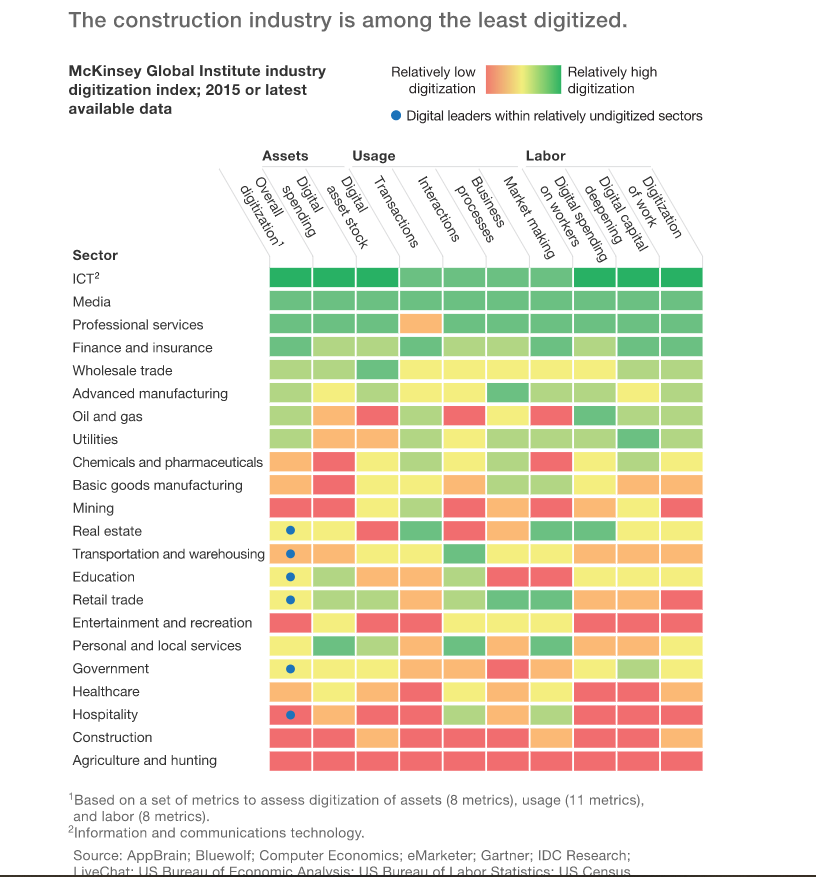
Construction companies have been slow to adopt digital tools and few have fully digitized their operations. What are the challenges construction companies face when considering cloud computing, online invoicing and more?
- Unique Projects and a Lack of Repetition
Many construction projects are a one-time job and require unique solutions and a specified team that might not work together again. Exceptions to this situation include multi-year agreements and subcontracting agreements.
2. Decentralization
Businesses in the construction world tend to be decentralized due to the demands of their work and variance in project locations. While a “corporate” office might stay static, project sites might be remote.
3. Fragmentation
Construction projects frequently require the assistance of small teams of specialists from various organizations, creating a potentially chaotic map of company policies and procedures.
How can the construction industry overcome these challenges?
Improved flexibility
Cloud hosting and mobile business applications keep teams connected despite moving locations.
Ease of Access
Online cloud applications, like time keeping, invoicing, time management software, and business suites like Microsoft Office makes it easy for teams to collaborate across locations and times within an organization and can readily be exported to a format that can be shared across companies.
Savings
Eliminate redundancy and costly, outdated tools that can drain your business by migrating to a centralized platform like a private cloud server.

by myCREcloud | Apr 2, 2026 | Company
INDUSTRY INSIGHT
The global technology supply chain is under pressure like never before. Here’s what’s driving costs up, and how mycrecloud protects you from the fallout.
If you’ve noticed conversations in the industry about rising infrastructure costs, you’re not imagining things. Across the world, businesses that rely on cloud hosting are grappling with the same reality: the hardware that powers modern computing is more expensive, more scarce, and harder to source than it was just a few years ago.
At myCREcloud, we host Sage solutions for hundreds of businesses across the US. We want to be transparent about what’s happening in the market and why choosing a specialist, committed cloud partner matters more than ever.
- 43% Average server cost increase since 2022
- 2–3× Lead times for enterprise hardware
- Bllions | Global AI chip demand surge
The AI boom is consuming the world’s chips
The extraordinary rise of artificial intelligence has fundamentally disrupted the semiconductor market. Hyperscale cloud providers such as Microsoft, Google, Amazon, Meta are purchasing graphics processing units (GPUs) and high-performance CPUs in staggering volumes to power their AI training infrastructure. This has created a cascading effect throughout the entire supply chain.
Even conventional server hardware, the kind that reliably runs business-critical applications like Sage has become harder to source and significantly more expensive. Manufacturers are prioritising AI-adjacent components, leaving the broader enterprise market squeezed.
“A single AI data centers build can consume more server components than an entire country’s enterprise IT refresh cycle and that pressure ripples down to every hosting provider.”
Supply chain fragility hasn’t gone away
The disruptions that began during the pandemic years fundamentally exposed the fragility of global semiconductor supply chains. While some normalisation occurred, the underlying vulnerabilities remain. Much of the world’s advanced chip manufacturing is concentrated in a small number of facilities in East Asia, making geopolitical tensions, particularly around Taiwan — a persistent risk factor that infrastructure pricing reflects.
Energy and raw material costs have also remained elevated. The metals and rare earth elements used in server components — copper, cobalt, lithium — have seen sustained price increases. These costs compound at every stage of the supply chain and eventually land in the price of a rack of servers.
Energy costs: the hidden hardware multiplier
Running modern hardware isn’t just about buying it; it’s about powering it, cooling it, and maintaining it. Energy prices across the US have remained volatile following the disruptions of 2022, and data centers are energy-intensive by nature. The cost of electricity, cooling infrastructure, and power redundancy systems all factor into what it takes to keep your Sage environment running reliably 24/7.
Responsible hosting providers — those who don’t cut corners on redundancy or uptime guarantees absorb these costs in their infrastructure investment. That investment is what keeps your business running when everything else is under pressure.
What this means for businesses running Sage
For companies hosting Sage 100 Contractor, Sage 300, or Sage Estimating on-premise or with a budget provider, these market pressures represent real risk. Under-resourced hosting environments cut corners on hardware refresh cycles, leaving you running on aging infrastructure with higher failure rates and slower performance. Security patching gets delayed. Redundancy gets reduced.
This is precisely where mycrecloud is different. Rather than passing unpredictability on to you, we:
Plan our hardware procurement years in advance, locking in pricing and availability before market spikes hit
Maintain dedicated Sage-optimized infrastructure, not oversubscribed generic cloud pools
Guarantee predictable, transparent pricing so you can budget with confidence
Provide enterprise-grade redundancy, US-based data centers, and Sage-accredited support as standard
Specialist hosting: now more valuable than ever
When the market is under pressure, generalist providers reduce quality to protect margins. Specialist providers like myCREcloud do the opposite; we double down on what we know best. Our entire infrastructure exists for one purpose: to give Sage users the fastest, most reliable, most secure cloud experience possible.
The complexity of today’s hardware market is an argument for choosing your hosting partner carefully, not for going it alone or picking whoever is cheapest today. Reliability and expertise, delivered consistently over years, is what protects your business when conditions are difficult.
Ready to move your Sage to the cloud?
Talk to our team about a tailored hosting solution. No jargon, no hidden costs — just reliable Sage hosting from specialists who understand your software.Get in touch with mycrecloud ↗

by myCREcloud | Jul 31, 2025 | Company
If your business gathers customer data like names, email addresses or phone numbers, you have a responsibility to keep their data safe. Your customers trusted you with their sensitive information, and now it’s your turn to return the favor.
Data privacy is all about how responsibly you treat your customer information. It’s not just about how you collect or store data, but also how you dispose of it.
In this blog, we’ll explore why data privacy matters, what can go wrong when you aren’t careful and, most importantly, how you can stay compliant and build trust.
Why data privacy is so important for your business
The efforts that you put into implementing data privacy show how much you value customer trust, safety and long-term growth. Here’s why data privacy is so important:
Protects your customers’ rights: Every individual has the right to the privacy of their data. Data privacy ensures that your customers have a say in who can access their personal information and who cannot.
Prevents harm: By implementing effective data practices, you can protect your customers from the consequences of identity theft, fraud and other malicious activities.
Maintains trust: When your customers understand that you put a great deal of effort into protecting their personal information, they’re more likely to stay loyal and even refer others.
What happens when you don’t comply
Ignoring data privacy laws can have serious consequences for your business. Here’s what happens when you don’t comply:
Financial penalties: Regulatory bodies can impose substantial fines on your business, depending on its size and revenue.
Legal troubles: Your customers can sue if it is proven that you failed to handle data effectively. These lawsuits are not only expensive but can also severely impact your business and its daily functions.
Damage to your reputation: Your customers trust you to protect their data. Data breaches and non-compliance can drive them away, leading to reputational damage and business loss.
Business disruptions: When faced with non-compliance and security issues, your team will have to divert their time and energy to fix them instead of growing your business.
Increased scrutiny: Once you are found to be non-compliant, your business might be subjected to increased scrutiny, and you may have to face more restrictions. That’s not something any business wants to face.
Where an IT service provider comes in
Here is how an experienced IT service provider can make things easier for you:
Compliance support: Experienced IT service providers are well-versed in laws and regulations. They can help you understand the state, federal or industry regulations that apply to your business and show you how to meet them.
Security practices: A trusted partner can help you implement strong security protocols like encryption, firewalls and multi-factor authentication. They also carry out regular security audits to reduce your exposure to risks.
Data management: A crucial part of data privacy is managing your data. An IT service provider can assist by ensuring the data is collected, stored and deleted in compliance with the prevailing data privacy laws.
Regular risk assessment: An IT partner can conduct regular risk assessments to spot weaknesses and patch them up before bad actors can exploit them.
Incident response: An experienced IT partner can respond quickly and help contain the situation before it spirals into a major event. They can investigate the cause and take corrective action.
Employee training: Your employees need to act as your first line of defense. That’s where an IT service provider can step in to help you educate your team about privacy best practices and other related topics.
Protect what matters effortlessly
As a business owner, you already have a set of priorities that you need to focus on. Don’t let data privacy requirements overwhelm you. As an experienced IT service provider, we can help you understand what matters for your business, implement the right protections and stay compliant.
We can do the heavy lifting for you while you focus on running your business. Schedule a no-obligation consultation today.
Note to MSPs: To ensure your content doesn’t get tagged for plagiarism, add the “no index” meta tag.

by myCREcloud | Apr 29, 2025 | Company
Cyber threats continue to evolve, and businesses of all sizes face the risk of having their sensitive data exposed on the dark web. A good Managed Service Provider (MSP) must offer dark web monitoring as part of its cybersecurity services to ensure clients’ data remains secure. This proactive approach helps businesses detect potential breaches early, safeguard their reputation, and maintain compliance with industry regulations.
The Importance of Dark Web Monitoring
Dark web monitoring involves continuously scanning hidden parts of the internet where cybercriminals buy, sell, and trade stolen data. Without this layer of protection, companies risk falling victim to fraud, identity theft, and financial loss. Here’s why every MSP should include dark web monitoring as part of their security offerings:
- Detect Data Breaches Early – Dark web monitoring allows businesses to identify if their sensitive information—such as login credentials, customer data, or financial records—has been compromised before attackers can exploit it. This early detection helps mitigate damage and prevents security incidents from escalating.
- Prevent Credential Theft – Cybercriminals frequently use stolen credentials to gain unauthorized access to company networks. By monitoring for exposed passwords and usernames, MSPs can alert businesses to potential threats and enforce password changes before hackers take advantage.
- Protect Brand Reputation – A data breach can severely impact a company’s reputation, leading to a loss of customer trust and credibility. With dark web monitoring, businesses can address security threats proactively, reducing the risk of a public breach that could harm their brand image.
- Ensure Compliance – Many industries require businesses to implement security measures that protect customer and employee data. Dark web monitoring helps organizations meet compliance requirements by demonstrating proactive security measures and breach response strategies.
- Reduce Financial Loss – Cybercrime can be costly, from ransomware attacks to fraudulent transactions and business downtime. By identifying compromised data before it’s exploited, businesses can take preventive actions that save them from costly recovery efforts and financial damage.
At myCREcloud, we understand the importance of staying ahead of cyber threats. Our dark web monitoring services provide real-time alerts, allowing businesses to respond swiftly to potential breaches. By integrating industry-leading security tools, we help our clients safeguard their sensitive data, reduce risks, and maintain business continuity.
Cybersecurity is no longer optional—it’s a necessity. Don’t wait until your company’s data is compromised. Partner with myCREcloud today and take advantage of our robust dark web monitoring solutions to keep your business safe.
Ready to strengthen your cybersecurity? Contact us today for a FREE Dark Web Scan!
by myCREcloud | Aug 9, 2024 | Company
In the construction industry, precision, efficiency, and timeliness are paramount. However, many construction companies still rely on outdated IT systems, risking inefficiencies and vulnerabilities. Investing in modern IT infrastructure, particularly through cloud hosting, can transform business operations, leading to increased efficiency, better project management, and enhanced data security. This essay explores the benefits of modern IT infrastructure, the risks of outdated systems, and how cloud hosting can support growth and innovation.
Modern IT infrastructure brings numerous advantages that significantly impact construction companies’ operations and overall success. One of the most immediate benefits is increased efficiency. Advanced IT systems streamline processes, automate repetitive tasks, and provide real-time access to project data. This leads to faster decision-making and reduces the time spent on administrative tasks. For example, cloud-based project management tools allow teams to collaborate seamlessly, access documents from anywhere, and track project progress in real-time.
Better project management is another key advantage. Modern IT infrastructure supports robust project management through tools like Building Information Modeling (BIM), project scheduling software, and real-time collaboration platforms. These tools enable precise planning, resource allocation, and tracking, reducing delays and cost overruns. Enhanced communication tools also ensure that all stakeholders are on the same page, leading to smoother project execution. In a field where coordination is critical, these tools can make a significant difference in project outcomes.
Enhanced data security is also a crucial benefit of modern IT infrastructure. With the increasing amount of data generated in construction projects, protecting this data is essential. Modern IT infrastructure includes advanced security measures such as encryption, multi-factor authentication, and regular security updates. These measures help safeguard sensitive information from cyber threats and unauthorized access, ensuring the integrity and confidentiality of project data. Given the rising threat of cyber-attacks, having a secure IT infrastructure is more important than ever.
On the other hand, relying on outdated IT systems poses significant risks. Increased downtime is a common issue with older systems, which are more prone to failures and crashes. This can disrupt project timelines, delay deliverables, and increase costs. Additionally, older hardware may not be compatible with newer software, further exacerbating downtime issues. These disruptions can have a cascading effect on project schedules and budgets, leading to client dissatisfaction and potential financial losses.
Security vulnerabilities are another major concern with outdated systems. Older systems often lack the latest security features and updates, making them vulnerable to cyber-attacks. Data breaches can result in the loss of sensitive information, legal liabilities, and damage to a company’s reputation. The construction industry is increasingly targeted by cybercriminals, making robust security measures essential. In an era where data protection regulations are becoming stricter, failing to secure data adequately can also result in significant fines and legal consequences.
Furthermore, companies that stick with outdated technology may struggle to keep up with competitors who have adopted modern IT solutions. Inefficient processes, slower project delivery, and lower-quality outputs can put a company at a disadvantage in a competitive market. Clients and partners are also more likely to choose companies that demonstrate technological proficiency. In an industry where reputation and reliability are crucial, lagging in technological adoption can be a significant handicap.
Cloud hosting offers a powerful solution for modernizing IT infrastructure, providing flexible, scalable, and secure solutions that support growth and innovation. One of the primary benefits of cloud hosting is its flexibility and scalability. Cloud hosting allows construction companies to scale their IT resources up or down based on project needs. This flexibility ensures that companies can handle peak workloads without overinvesting in hardware. Additionally, cloud solutions can be accessed from anywhere, enabling remote work and improving collaboration among geographically dispersed teams. This adaptability is particularly valuable in the construction industry, where project demands can fluctuate significantly.
Cost-effectiveness is another significant advantage of cloud hosting. Cloud hosting reduces the need for significant upfront investments in hardware and software. Instead, companies can opt for subscription-based models, paying only for the resources they use. This can lead to substantial cost savings, especially for small to medium-sized construction firms. By eliminating the need for large capital expenditures and reducing ongoing maintenance costs, cloud hosting allows companies to allocate their resources more efficiently.
Enhanced security is another key benefit of cloud hosting. Reputable cloud hosting providers offer robust security measures, including data encryption, regular backups, and compliance with industry standards. These providers invest heavily in security infrastructure and employ experts to monitor and protect data, ensuring a higher level of security than many companies can achieve on their own. By leveraging the expertise and resources of cloud providers, construction companies can significantly enhance their data security without incurring the high costs associated with maintaining these capabilities in-house.
Cloud hosting also supports innovation by enabling the adoption of cutting-edge technologies such as AI, IoT, and big data analytics. These technologies can provide valuable insights, optimize resource allocation, and improve project outcomes. For example, IoT sensors can monitor construction site conditions in real-time, while AI algorithms can predict potential issues before they become critical. By integrating these advanced technologies into their operations, construction companies can enhance their competitiveness and deliver higher-quality projects.
In conclusion, investing in modern IT infrastructure is no longer optional for construction companies looking to stay competitive and efficient. The benefits of increased efficiency, better project management, and enhanced data security far outweigh the risks associated with outdated systems. Cloud hosting, in particular, offers a flexible, scalable, and secure solution that supports growth and innovation. By embracing modern IT infrastructure, construction companies can not only improve their current operations but also position themselves for future success in an increasingly digital world.

by myCREcloud | Sep 3, 2025 | Company
Trusted by hundreds of contractors using Sage 300 CRE, Anterra is designed to eliminate tedious spreadsheets, improve productivity and help you make smarter, data-driven decisions.
With Anterra, you can:
- Gain unshakeable confidence in your data. See numbers clearly, drill into transactions, and answer business questions with ease.
- Achieve dramatic efficiency gains. Spend less time running and managing reports and more time using them to drive business forward.
- Unlock proactive financial control. Bridge the gap between ops and finance, get ahead of risk, and get the right data in the hands of the right stakeholder.
Anterra offers two powerful solutions designed for Sage 300 CRE users: Anterra Data Center (ADC) for lightning-fast data replication and Anterra Business Intelligence (ABI) for advanced reporting and financial management.
Anterra Data Center (ADC)
ADC is a lightning-fast Pervasive-to-SQL server replicator for Sage 300 CRE.
- Replicates to SQL 100x faster than the Sage Data Replicator
- Improves reporting in Power BI, Office Connector, Crystal, and more
- No table locks, no errors, and no new hardware required
- Installs in under an hour with immediate results
Anterra Business Intelligence (ABI)
ABI is built for construction with powerful out-of-the-box dashboards, reporting tools, forecasting capabilities and more, all in the cloud.
- Automates WIP reporting, AR collections, forecasting, and financial statements
- Includes drag-and-drop report builders, customizable KPI dashboards, and AP/AR image integration
- Built-in construction-specific analytics and precalculated measures
- Accessible from anywhere with secure, cloud-based access
Visit Anterra online!
Website
