(619) 802-0219 sales@mycrecloud.com
The 2026 Silicon Crisis: Why Your Next Server Might Cost 100% More

The 2026 Silicon Crisis: Why Your Next Server Might Cost 100% More

As a Controller or CFO in the construction industry, you are used to managing fluctuating material costs like lumber and steel. But there is a silent spike hitting your “Fixed Assets” category that most firms aren’t prepared for: The 2026 Silicon Crisis. If you have been planning to refresh your on-premise server this year, the quote sitting on your desk is likely 30% to 40% higher than it was just a few years ago. Here is why this is happening and why the “old way” of buying hardware is becoming a threat to your margins.

For a decade, hardware followed a predictable path: it got faster and cheaper. That cycle has officially broken.

  • The AI Tax: Global chip manufacturers have pivoted production toward high-margin AI processors. This has created a massive supply vacuum for the standard enterprise CPUs and RAM that power construction accounting software.
  • Stricter Software Demands: Modern versions of Sage are no longer “light” applications. For example, Sage 100 Contractor version 26.1 now requires a minimum of a SATA II solid-state drive with at least 100 GB for backups.
  • The Memory Floor: While you might have “gotten by” with 4 GB of RAM in the past, Sage 300 CRE now requires 8 GB at the server level just to handle SQL Server and basic operations.

The Bottom Line: You are paying “premium” prices for what used to be “standard” hardware.

When hardware costs rise, the temptation is to “sweat the asset” keeping that five-year-old server running for just one more year. But in 2026, this creates three massive risks:

1. The Performance Gap

Sage 100 and 300 are moving toward SQL-heavy environments to provide the reporting speed you need. If your hardware doesn’t meet the recommended configuration such as Intel 2nd generation Core processors or AMD equivalents—your team will lose hours every week to “spinning wheels”.

2. The Compatibility Trap

Software and hardware must evolve together. For instance, MS SQL Server 2016 is no longer supported on Windows Server 2022. If you upgrade your OS to stay secure but keep your old SQL instance, your accounting system could grind to a halt.

3. Maintenance & Power

On-premise servers require physical security, climate control, and constant monitoring. As energy costs and IT labor rates climb, the “hidden” cost of that box in the closet is often double its original purchase price.

You have a choice: reinvest a massive chunk of capital into a depreciating asset that will be obsolete in 36 months, or move to a predictable, managed environment.

Why myCREcloud is the Strategic Choice:

  • Zero Capital Expenditure: Stop the $15,000–$20,000 hardware “surprise.” You pay a predictable monthly fee that scales with your headcount.
  • Built-In Compliance: We handle the complex stuff, like ensuring you have full control over required folders and registry keys. 
  • Construction-Specific Support: We don’t just host “apps”; we host your business. We understand the nuances of Sage 300 CRE version 25.2 and Sage 100 Contractor 26.1.

At myCREcloud, our clients prices have stayed the same. Instead of buying a new on-premise server, could moving to the cloud and getting rid of your hardware be a safer and more cost effective way to work? Connect with one of the members from our cloud team to see if this could be a good fit for your company. Call us at 619.704.2969 today!

Enhancing Network Security with SOC Services 

Enhancing Network Security with SOC Services 

In today’s digital landscape, ensuring the security of your business’s network is crucial. With cyber threats becoming increasingly sophisticated, businesses need robust solutions to protect their data and systems. MyCREclouds  Security Operations Center (SOC) offers 24/7 monitoring, threat detection, and comprehensive security services, ensuring your network remains secure around the clock. Here’s how MyCREclouds SOC can benefit your business: 

1. 24/7 Monitoring and Threat Detection

MyCREclouds SOC provides continuous monitoring of your network, detecting suspicious activity and potential threats at any hour. This proactive approach ensures that any unauthorized access or abnormal behavior is swiftly identified and addressed. By maintaining a constant watch over your systems, RocketCyber helps prevent breaches and data loss, protecting your business from potential threats 24/7. 

2. Rapid Threat Response and Notifications

When a threat is detected, speed is critical. MyCREclouds SOC responds quickly to incidents, assessing the situation and taking immediate action to neutralize the threat. This might involve isolating affected systems, applying necessary patches, or coordinating with law enforcement. The SOC also provides immediate notifications to key stakeholders, keeping you informed and allowing for a faster, more coordinated response. 

3. Threat Isolation and Remediation

In the event of a detected threat, MyCREclouds SOC isolates the compromised systems to prevent further damage and spread within the network. Isolation minimizes the impact of the threat while allowing the team to analyze and address the issue without causing downtime to unaffected systems. Once the threat is contained, the SOC team conducts thorough remediation, applying necessary fixes to resolve vulnerabilities and prevent future incidents. This process ensures that your network remains secure and resilient, even in the face of advanced threats. 

4. Advanced Threat Detection Capabilities

MyCREclouds utilizes advanced technologies, such as machine learning and artificial intelligence, to enhance threat detection. These tools help identify not only known threats but also new, emerging threats that may not yet have established signatures. This allows the SOC to proactively guard against a wide range of cyber threats, providing a higher level of protection for your business. 

5. Customized Security Strategies

Every business has unique security needs, and MyCREclouds SOC offers tailored security strategies to meet those needs. By understanding your industry, network infrastructure, and specific operational risks, MyCREcloud can implement a customized monitoring and response protocol. This tailored approach ensures that your business is protected against its unique vulnerabilities, providing a more effective and personalized security solution. 

6. Compliance and Reporting

Maintaining compliance with industry standards and regulations, such as GDPR, HIPAA, and ISO 27001, is crucial for many businesses. MyCREclouds SOC not only provides security measures to protect against breaches but also offers detailed reporting and documentation. These reports outline threats identified, actions taken, and the effectiveness of your security measures, helping to maintain transparency and ensure compliance. 

7. Ongoing Education and Awareness

Cyber threats are constantly evolving, so it’s important to stay informed. MyCREclouds SOC team provides regular threat intelligence updates, training sessions, and awareness campaigns. This ongoing education ensures that your team is well-equipped to recognize and respond to the latest threats, enhancing your overall security posture. 

By offering 24/7 monitoring and threat detection, MyCREclouds SOC ensures that your business is protected from the ever-present risk of cyber threats. With customized security strategies, rapid threat response, incident notifications, threat isolation and remediation, and comprehensive compliance reporting, MyCREcloud helps businesses maintain a secure and resilient network environment. 

Now That You’re in the Cloud, What’s Next?

Now That You’re in the Cloud, What’s Next?

This post is co-authored by ProNovos

Congratulations! Transitioning your ERP to the cloud is a significant milestone for any construction company. You’ve unlocked new levels of accessibility, scalability, and efficiency. Critical data is now at your fingertips—whether you’re in the field, at the office, or halfway across the world.

But moving to the cloud is just the first step. While it addresses IT and accessibility challenges, many construction professionals quickly realize it doesn’t solve the bigger questions: How do you use data to protect profits, streamline collaboration, and make faster decisions?

Breaking Down Silos: Connecting Operations and Accounting

A common challenge in construction is the disconnect between accounting and operations. Financial data often remains locked in the ERP, slowing decision-making and leaving project managers (PMs) without critical insights.

ProNovos Construction Intelligence bridges this gap. It integrates with your cloud-based ERP to deliver real-time, actionable insights to PMs while maintaining accounting integrity.

How It Works

ProNovos empowers PMs with tools like:

  • Cost Forecasting: Up-to-date projections to manage budgets proactively.
  • Change Order Management: Real-time tracking to ensure nothing is missed.
  • Billing Analysis: Accurate scheduling to improve cash flow.

The Next Step in Your Journey

Moving to the cloud modernized your operations—now ensure your team can access and act on the data they need. ProNovos transforms collaboration, protecting profits and driving success.

Ready to learn more? Let’s chat. Schedule a demo today to see myCREcloud and ProNovos in action!

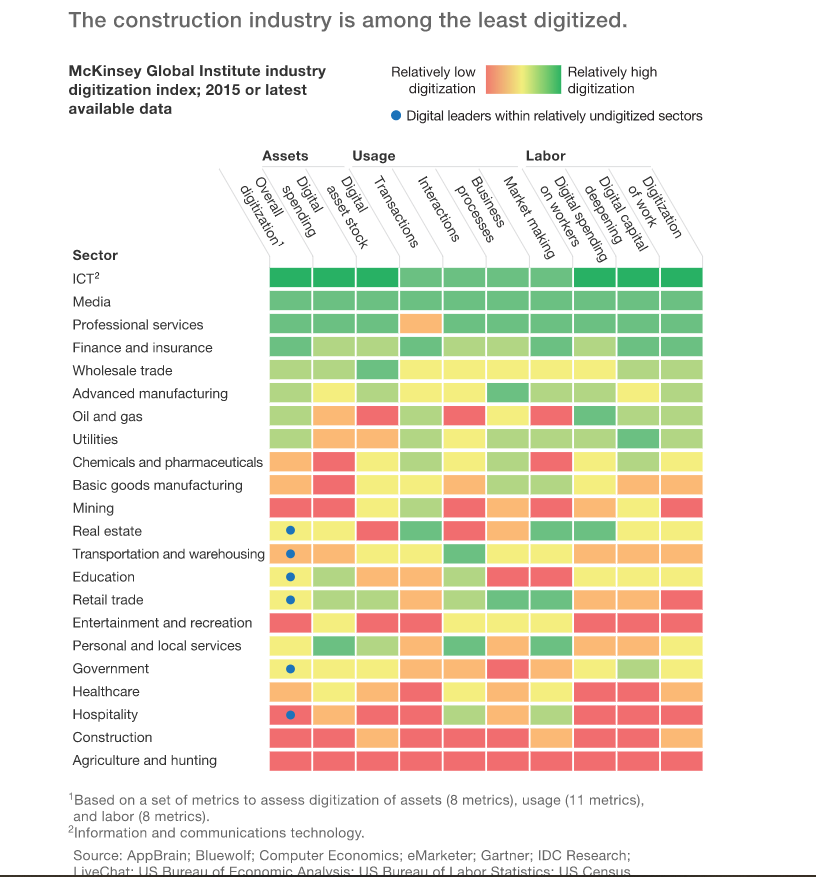
Why is construction among the least digitized industries?

Why is construction among the least digitized industries?

Construction companies have been slow to adopt digital tools and few have fully digitized their operations. What are the challenges construction companies face when considering cloud computing, online invoicing and more?

  1. Unique Projects and a Lack of Repetition

Many construction projects are a one-time job and require unique solutions and a specified team that might not work together again. Exceptions to this situation include multi-year agreements and subcontracting agreements.

2. Decentralization

Businesses in the construction world tend to be decentralized due to the demands of their work and variance in project locations. While a “corporate” office might stay static, project sites might be remote.

3. Fragmentation

Construction projects frequently require the assistance of small teams of specialists from various organizations, creating a potentially chaotic map of company policies and procedures.

How can the construction industry overcome these challenges?

Improved flexibility

Cloud hosting and mobile business applications keep teams connected despite moving locations.

Ease of Access

Online cloud applications, like time keeping, invoicing, time management software, and business suites like Microsoft Office makes it easy for teams to collaborate across locations and times within an organization and can readily be exported to a format that can be shared across companies.

Savings

Eliminate redundancy and costly, outdated tools that can drain your business by migrating to a centralized platform like a private cloud server.