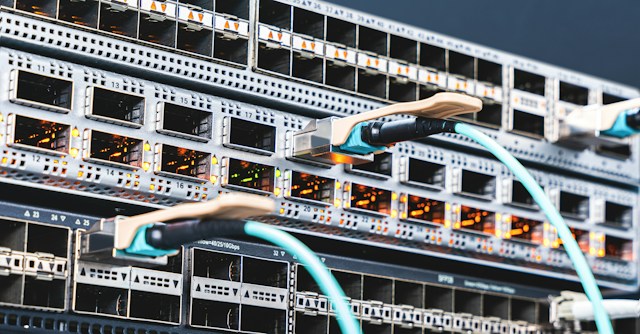
The AI boom has quietly become a cloud infrastructure boom. As companies race to roll out AI tools, the biggest line items in tech budgets are no longer flowing into software. They are pouring into chips, servers, power systems, and the massive data centers needed to run large models at scale.
The numbers keep getting bigger
According to figures cited by Reuters, Alphabet, Amazon, Meta, and Microsoft are collectively on pace to spend around $650 billion on AI-related infrastructure in 2026. That is up from roughly $410 billion in 2025, a leap that shows just how quickly the center of gravity in tech spending has shifted toward physical capacity.
Other efforts are adding to the pile. Stargate, a joint project backed by OpenAI, SoftBank, and Oracle, aims to put as much as $500 billion into AI infrastructure across the United States over the coming years. On the venture side, the Stanford AI Index Report pegged global private investment in generative AI at $33.9 billion for 2024, an 18.7 percent jump over the year before.
The bottleneck has moved
Training and running modern AI models is enormously compute intensive. It typically means thousands of GPUs working in parallel across distributed facilities, which makes the networking between chips matter nearly as much as the chips themselves.
That context helps explain Nvidia's recent decision to commit $2 billion each to photonics firms Lumentum and Coherent. Photonics uses light instead of electrical signals to move data, which can be faster and more power efficient. As AI clusters grow, those internal links increasingly dictate how quickly a system can actually learn and serve predictions.
The lesson for the industry is clear. For most teams building AI, the limiting factor is no longer code. It is whether the underlying hardware, facilities, and power supply can keep up.
What this means for enterprises
Enterprise adoption is a major piece of the story. Businesses are folding AI into customer support, analytics, and internal productivity tools, and very few of them can host that workload on their own servers. They rent capacity from cloud providers instead, often through multi-year commitments worth billions.
For IT leaders, this shifts how cloud decisions get made. GPU availability, data center location, energy supply, and long-term compute costs are all becoming central to vendor evaluations. The next chapter of cloud computing will be shaped less by clever software and more by who has the physical capacity to run it.
Want to learn more about the cloud? Contact Tyler at Tyler.mathis@mycrecloud.com or 619.704.2969!